
Multiple authors contributed to this product. Rasha Hamid has been a special education educator for over 20 years, working in the New York City neighborhoods of East Harlem, Hamilton Heights, and Brooklyn, and in Khartoum, Sudan. Rasha considers herself an educator-activist: someone who works to make the world more just, joyful, equitable, and sustainable through the education of students and teachers. She began creating picture books with her classes to fill the need for books reflecting her students, their experiences, and their passions. In addition to Uncommonly Curious, Eternally Autistic, Rasha is the author of Kadisa ?????, How to Bird, and Hello, Beech Tree!. Rasha is proud to be the AuDHD (autistic + ADHD) mom of an AuDHD young adult. Autism and observing the natural world are two of Rasha's special interests. She attended New York City public schools before earning a bachelor's degree in Africana Studies and Education at Vassar College, and a master's degree in Special Education at Bank Street College of Education. Jenna Elyse Johnson has been a storyteller ever since elementary school, when her teachers told her she could be a writer. Jenna now writes stories for children that are informed by her life, which sometimes include tales about her service dog, Hamilton, or about her mischievous twin brother. As a disabled author, Jenna's passion is to write about disability joy and to help disabled children feel seen on the page. When not writing, Jenna enjoys teaching enrichment classes for homeschooled kids, doing school visits with her service dog, working at her local independent bookstore, exploring the beach, getting lost in a good book, and discovering new gluten-free and dairy-free recipes. Jenna lives in Folsom, California. Dr. Melinda Gonzalez is a poet, spoken word artist, storyteller, anthropologist, and educator of Afro-Indigenous/Puerto Rican descent. Curious Mind and Dancing Feet is her debut as a children's author. She has performed poetry internationally under the pen name La Poeta Guerrera. As a socio-cultural anthropologist specializing in environmental anthropology, Melinda's work maps how disaster is differentially distributed across race, class, and gender. She brings decolonial and Indigenous research methods to environmental justice studies. She has facilitated creative writing and academic workshops as tools to resist colonial repression and to support poets, writers, and scholars in finding and strengthening their authentic voices throughout their academic and creative journeys. Her poetry and writing have appeared in both academic and literary journals and on the stage. Melinda believes in the transformative power of storytelling to imagine new futures and nurture hope across generations.

Description
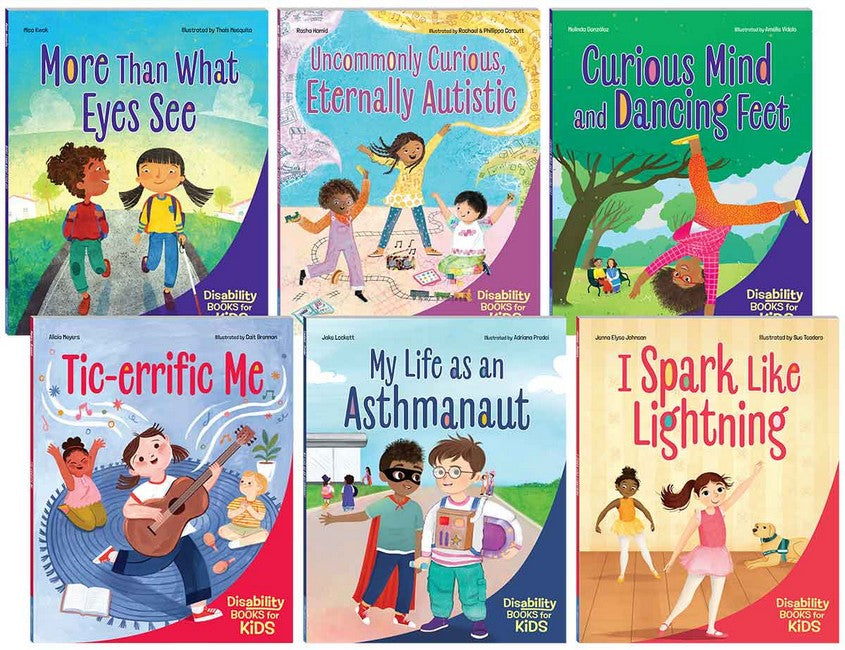
Celebrate and empower kids of all abilities with this six-book collection! The Disability Books for Kids series helps children understand both visible and invisible disabilities through honest, first-person stories. Based on real experiences, these books encourage empathy, celebrate differences, and help children learn how to be supportive friends and allies. Each title also includes an author's note for readers. Books in this Set: More Than What Eyes See: A book about blindness Maya shares what it's like to be blind and how she confidently navigates the world. I Spark Like Lightning: A book about epilepsy Jen describes living with epilepsy and how support helps her feel safe and strong. My Life as an Asthmanaut: A book about asthma Jacob explains what asthma feels like and how he manages it with courage and calm. Uncommonly Curious, Eternally Autistic: A book about autism Three kids share what it's like to be autistic and celebrate the strengths that make them unique. Curious Mind and Dancing Feet: A book about ADHD A young girl describes life with ADHD, from wiggles and wandering thoughts to joyful focus. Tic-errific Me: A book about Tourette syndrome A young girl explains her Tourette's tics and the strategies that help her thrive.